Cryptonomicon
Several years ago, I read a wonderful book by Neal Stephenson called Cryptonomicon. It is a book about the things I absolutely love to read about, WWII and cryptography. I consider this to be one of, if not the best books I have ever read. Quite frankly, if I could read only one book ever for the rest of my life, this would be it.
Now, the copy I read was my brothers. It looks like this,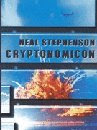 and has the following ISBN number: 0099410672. This book has long been out of print. It was first printed in 1999 or 2000, and the best thing about it is that it has an incredibly soft spine. It is a paper back, and yet I can bend it to extreme angles without the cracking or breaking that you get with most cheaper paperbacks. In short, it's the perfect binding. Now, I've been looking for this particular edition of this book for a while, and I finally found the proper edition with the right ISBN, and a dealer that actually seemed to have it in stock (the picture even matched).
So I go to this dealer (bokus.com) and I order this book. I make damn sure that the ISBN is the right one, so that I wont get the other edition that most stores have. I shall refer to this as the "wrong" edition. It looks like this, and it has the following ISBN number: 0099410676. As you can see, the ISBN numbers are terrible similar. This, possibly along with some stocking error or ISBN merging (having multiple ISBNs pointing to the latest edition of the book you have in store), bokus.com sent me the wrong book. I was a bit disappointed, as I was looking forward to getting my hands on the good edition once more, and reading it. So I email bokus and tell them about my predicament. They say they're sorry, and since they don't actually have they don't have the real book in stock, and neither does their supplier. Fair enough I think, it is a fairly rare book this long after the original publication. So, they tell me, we've clearly sent you the wrong book, would you like to return it for a complete refund? I say yes, unfortunately this isn't the book I want, how do we solve the return issue. It should be noted that I ordered this book from a Swedish retailer, and I currently live in the Netherlands, so they had to ship it for more than the book was worth. So, I've told them that I want to return it, and could they please instruct me as to how. The next email I get from them says something like "lets do this, it's probably going to cost us more to ship the book back than the book is actually worth, so you can just keep the book and I've already refunded your money".
Lets let that sink in for a minute, they were not only nice and had a swift response, but they were also apologetic about their mistake and they GAVE ME THE BOOK FOR FREE in the end! How cool is that! That's not something you see every day. Needless to say I was very pleased with this evolution of the matter so I wrote them a nice thank you letter, and now I actually have a free copy of the cryptonomicon. Wrong edition as it may be, they were so nice to me, and it was free in the end, so I really can't complain that much. Now if the rest of my problems could solve them selves with such ease I would be a happy man.
Now, the copy I read was my brothers. It looks like this,
 and has the following ISBN number: 0099410672. This book has long been out of print. It was first printed in 1999 or 2000, and the best thing about it is that it has an incredibly soft spine. It is a paper back, and yet I can bend it to extreme angles without the cracking or breaking that you get with most cheaper paperbacks. In short, it's the perfect binding. Now, I've been looking for this particular edition of this book for a while, and I finally found the proper edition with the right ISBN, and a dealer that actually seemed to have it in stock (the picture even matched).
So I go to this dealer (bokus.com) and I order this book. I make damn sure that the ISBN is the right one, so that I wont get the other edition that most stores have. I shall refer to this as the "wrong" edition. It looks like this,
 and it has the following ISBN number: 0099410676. As you can see, the ISBN numbers are terrible similar. This, possibly along with some stocking error or ISBN merging (having multiple ISBNs pointing to the latest edition of the book you have in store), bokus.com sent me the wrong book. I was a bit disappointed, as I was looking forward to getting my hands on the good edition once more, and reading it. So I email bokus and tell them about my predicament. They say they're sorry, and since they don't actually have they don't have the real book in stock, and neither does their supplier. Fair enough I think, it is a fairly rare book this long after the original publication. So, they tell me, we've clearly sent you the wrong book, would you like to return it for a complete refund? I say yes, unfortunately this isn't the book I want, how do we solve the return issue. It should be noted that I ordered this book from a Swedish retailer, and I currently live in the Netherlands, so they had to ship it for more than the book was worth. So, I've told them that I want to return it, and could they please instruct me as to how. The next email I get from them says something like "lets do this, it's probably going to cost us more to ship the book back than the book is actually worth, so you can just keep the book and I've already refunded your money".
Lets let that sink in for a minute, they were not only nice and had a swift response, but they were also apologetic about their mistake and they GAVE ME THE BOOK FOR FREE in the end! How cool is that! That's not something you see every day. Needless to say I was very pleased with this evolution of the matter so I wrote them a nice thank you letter, and now I actually have a free copy of the cryptonomicon. Wrong edition as it may be, they were so nice to me, and it was free in the end, so I really can't complain that much. Now if the rest of my problems could solve them selves with such ease I would be a happy man.
Labels: book, crypto, cryptonomicon, kindness, money, neal stephenson
posted by Markus at
8/01/2008 10:42:00 AM
|
0 comments


